Hasley Hall · documented history
The Lordship of Hasley
Follow the recorded succession from the eve of the Norman Conquest to the present stewardship.
A walk through time
The historical holders of Hasley
Select a name to open its record, or use the dynastic chapters to follow changes in inheritance and stewardship.
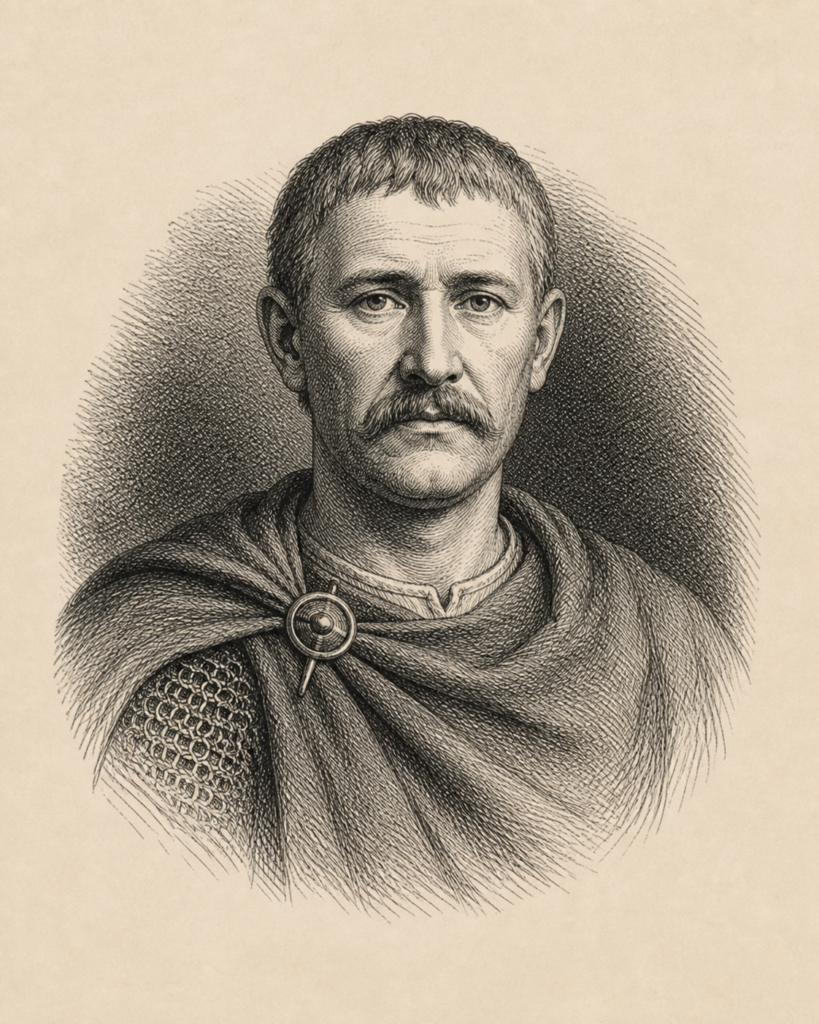
Pre-Conquest record
Thori
Recorded pre-Conquest lord
A royal guard and court figure whose holdings were lost during the Norman redistribution after Hastings.
Thori is presented as the first recorded feudal lord of the estate that became Hasley. He served as a Royal Guard and member of the court under Edward the Confessor and Harold Godwinson.
The Battle of Hastings and the subsequent Norman reallocation of English land ended his family’s claim to the property, making his tenure the dividing point between the pre- and post-Conquest histories.
- Court of Edward the Confessor
- Court of Harold Godwinson
- Dispossessed after 1066
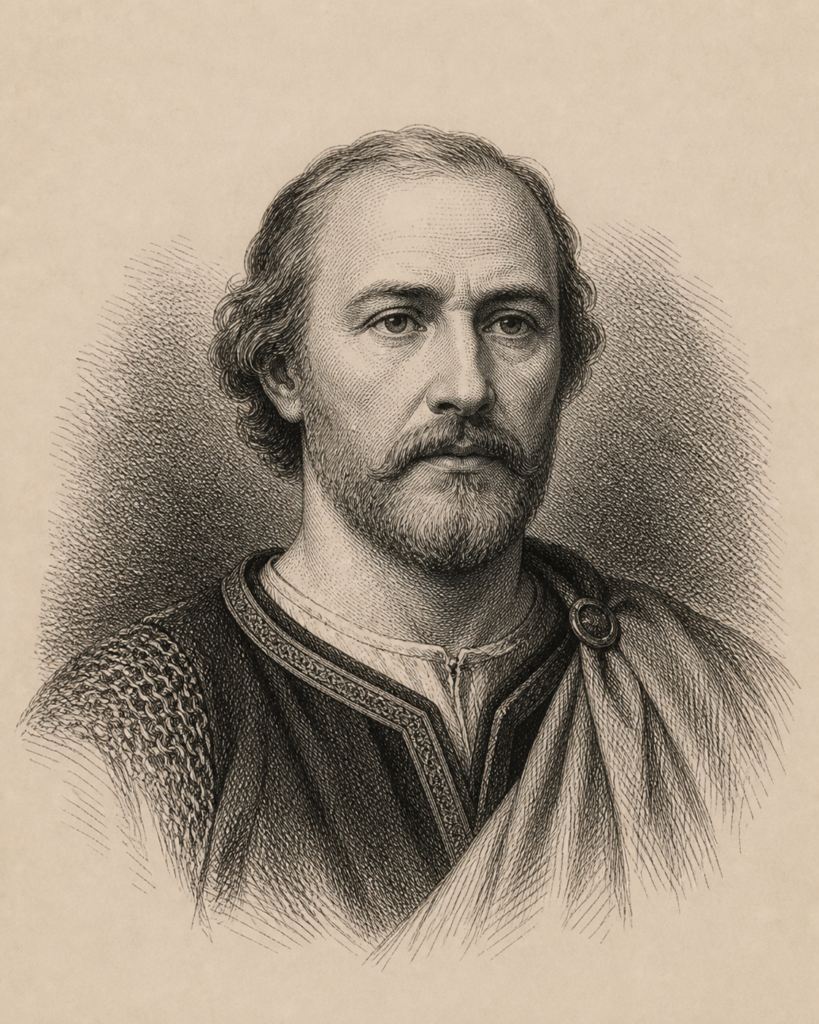
Holder 1 in the recorded post-Conquest succession
Roger d’Ivery
Lord of Hasley
William the Conqueror’s cupbearer and Roger d’Oilli’s sworn companion in the Norman settlement.
Also recorded as Rodger d’Yorey, Roger was William the Conqueror’s cupbearer. Before leaving France in 1066, he and Robert d’Oilli made a pact to share their fortunes.
Robert took the greater share around Oxford and built its castle. Roger received lands at Beckley, Ambrosden, Midbury and the Barony of St Walery, the latter confirmed in 1074. The page traces his ancestry to Rudolph, half-brother of Richard, first Duke of Normandy.
- Domesday holder
- Royal cupbearer
- Arms: Or, three chevrons gules
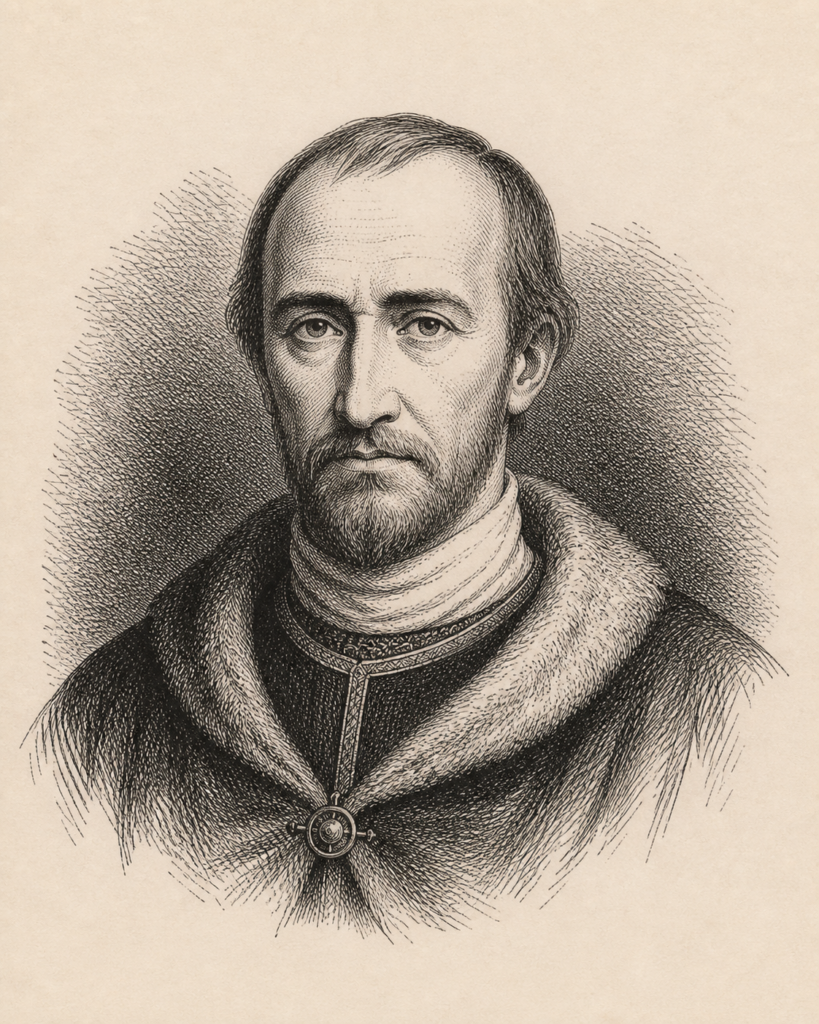
Holder 2 in the recorded post-Conquest succession
Jeffrey d’Ivery
Lord of Hasley
Roger’s direct heir; his death without heirs returned the lands to Henry I.
Jeffrey succeeded Roger d’Ivery but died in 1112 without heirs. The lands consequently reverted to the Crown under King Henry I.
The page associates his tenure with the Domesday record of Hasley’s extent and productivity and with the territorial unit known as the hundred.
- Direct heir of Roger
- Died without heirs
- Lands reverted to the Crown
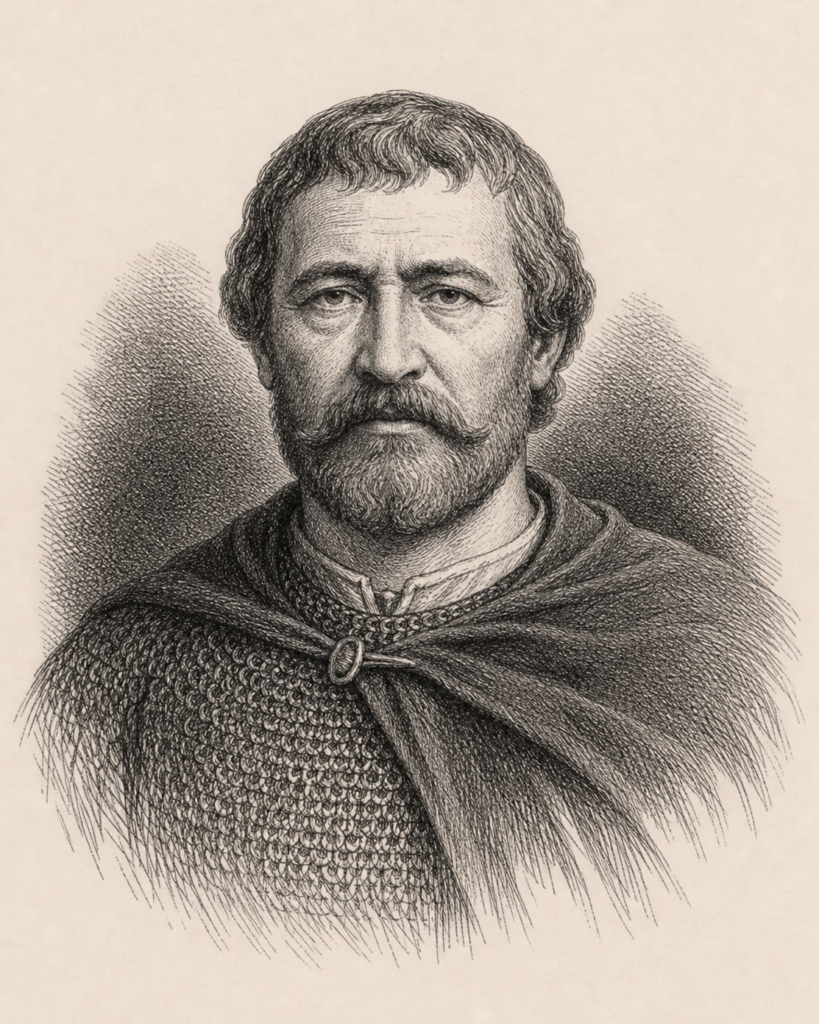
Holder 3 in the recorded post-Conquest succession
Guy de St Walery
Lord of Hasley
Began more than a century of St Walery influence after the d’Ivery lands returned to the Crown.
Guy de St Walery received the lordship in 1112 during the reign of Henry I. The St Walery dynasty is described as shaping more than a century of relative stability.
He was also granted the Barony of Ivri. His attributed arms are Or, two lions passant guardant gules.
- Lord from 1112
- Barony of Ivri
- St Walery dynasty
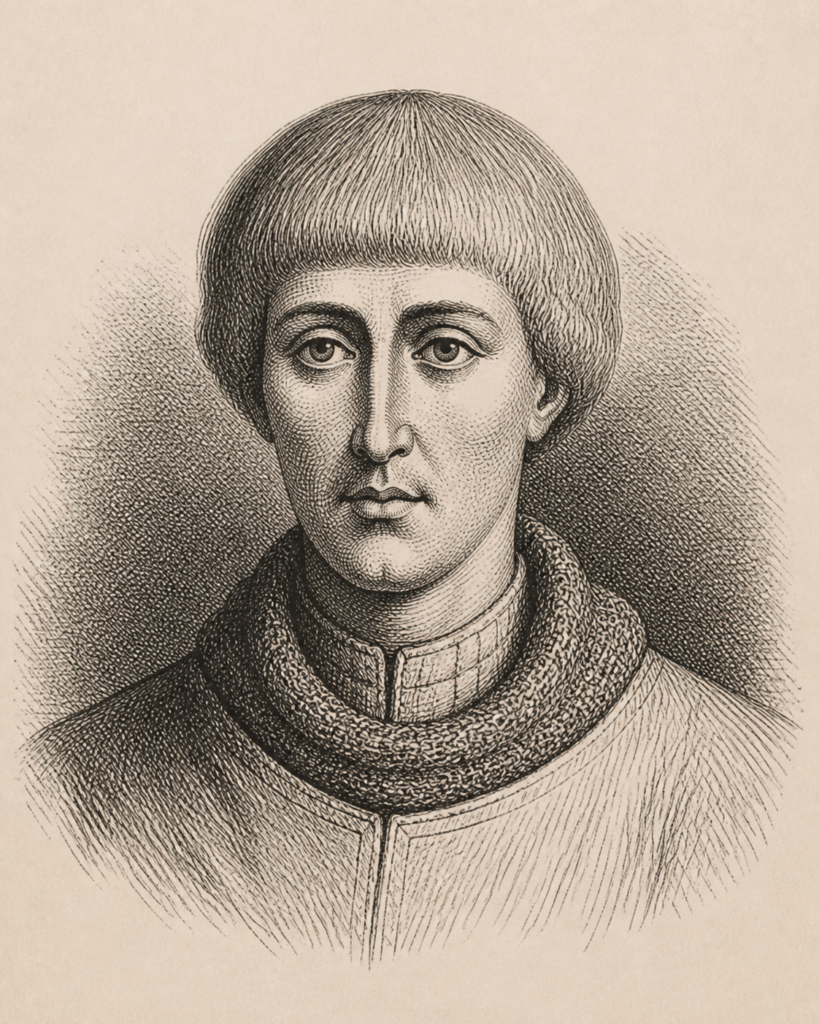
Holder 4 in the recorded post-Conquest succession
Bernard de St Valery
Lord of Hasley
A crusader lord whose surviving memorial is associated with Thornton Church.
Bernard, son of Reginald, is recorded as Lord of Hasley in 1166. He participated in the Third Crusade and died at Messina.
He left two sons, Bernard and Thomas. The younger Bernard died without descendants in 1205. A crypt depiction associated with Bernard predates the oldest surviving manor structure.
- Recorded in 1166
- Third Crusade
- Died at Messina
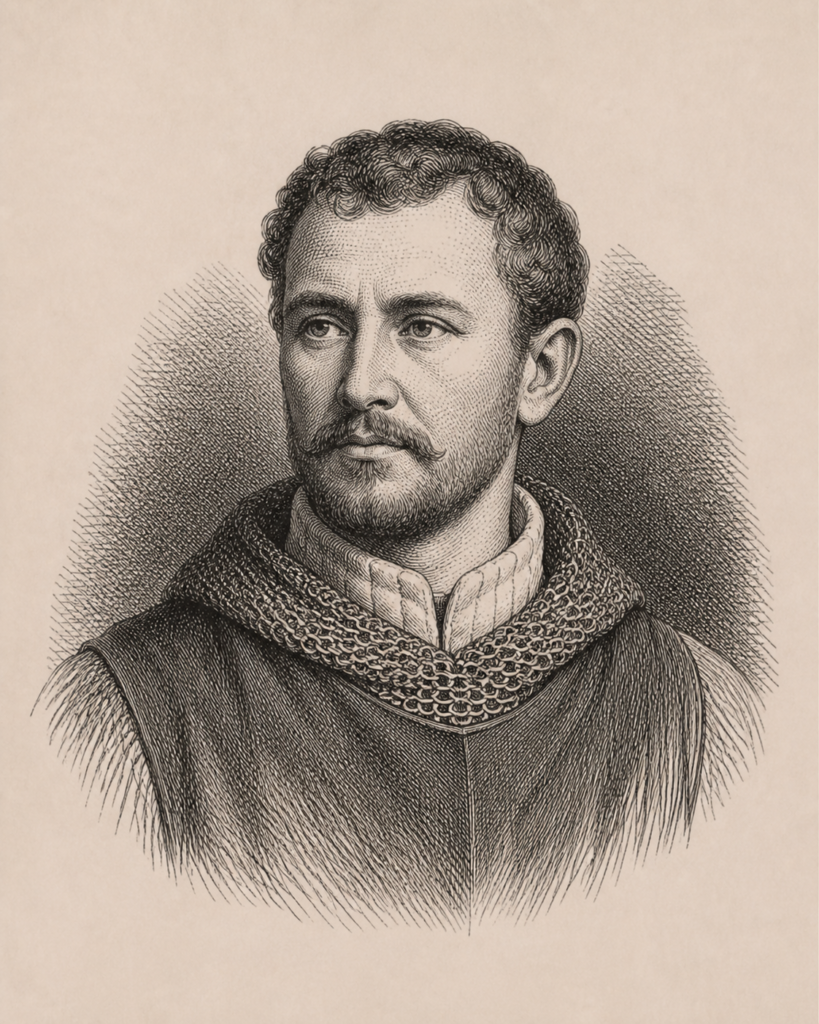
Holder 5 in the recorded post-Conquest succession
Robert de Dreux
Lord of Hasley
Entered the Hasley succession through his marriage to Allanore in 1222.
The page places Robert de Dreux within the succession through his marriage to Allanore in 1222.
His attributed arms are described as chequy argent and azure within a bordure gules, with a canton ermine.
- Marriage to Allanore
- Succession in 1222
- de Dreux connection
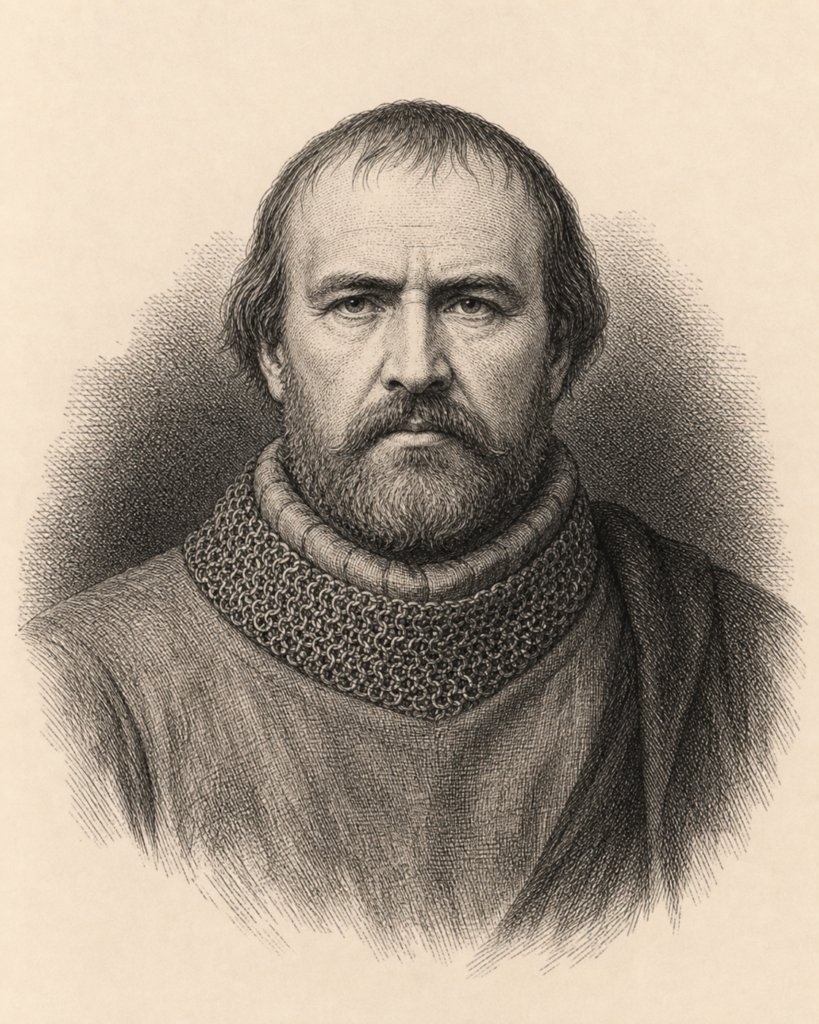
Holder 6 in the recorded post-Conquest succession
Ralph de Hareng
Lord of Hasley
Lord of Westbury and steward of the St Walery barony before receiving Hasley from Allanore.
Ralph de Hareng held the lordship of Westbury and had stewardship of the Barony of St Walery from 1202.
The exact date of Hasley’s transfer is debated in the page, but the preferred date is approximately 1235. His attributed arms repeat the two lions associated with Guy de St Walery.
- Lord of Westbury
- Transfer from Allanore
- Date recorded as c. 1235
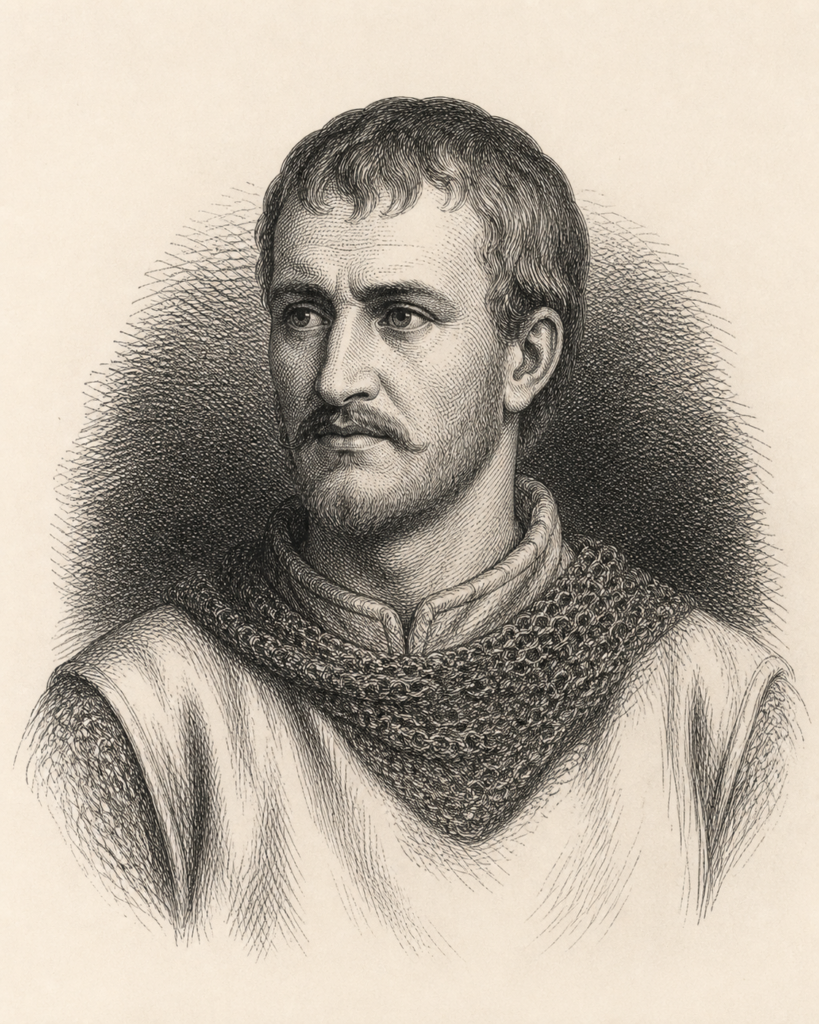
Holder 7 in the recorded post-Conquest succession
Sir James le Savage
Lord of Hasley
A short tenure recorded through an ancient deed and later Hasley land transactions.
Sir James le Savage is placed in the succession around 1244 through Ralph de Hareng and a deed from Allanore.
His period appears to have been brief; records from 1250 connect him with land transactions in Hasley. His attributed arms are argent, five lions rampant sable.
- Ancient deed from Allanore
- Land transactions in 1250
- Short medieval tenure
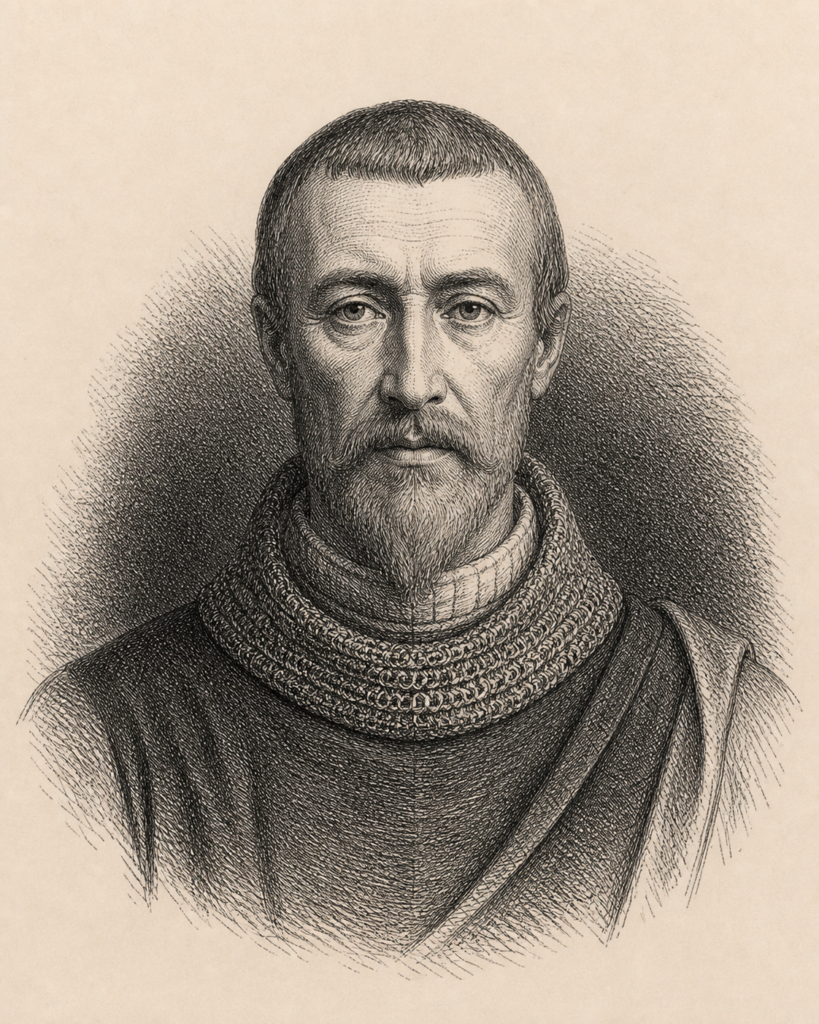
Holder 8 in the recorded post-Conquest succession
Richard de Chastillon
Lord of Hasley
Held Hasley with Roysia; after Richard’s death she remained Lady of Hasley until 1303.
Richard de Chastillon and his wife Roysia took guardianship of the estate in 1264.
After Richard’s death, Roysia continued as Lady of Hasley until 1303. The lordship then passed through their descendants and eventually to their grandson John.
- Joint tenure with Roysia
- Roysia styled Lady of Hasley
- Descent through their family
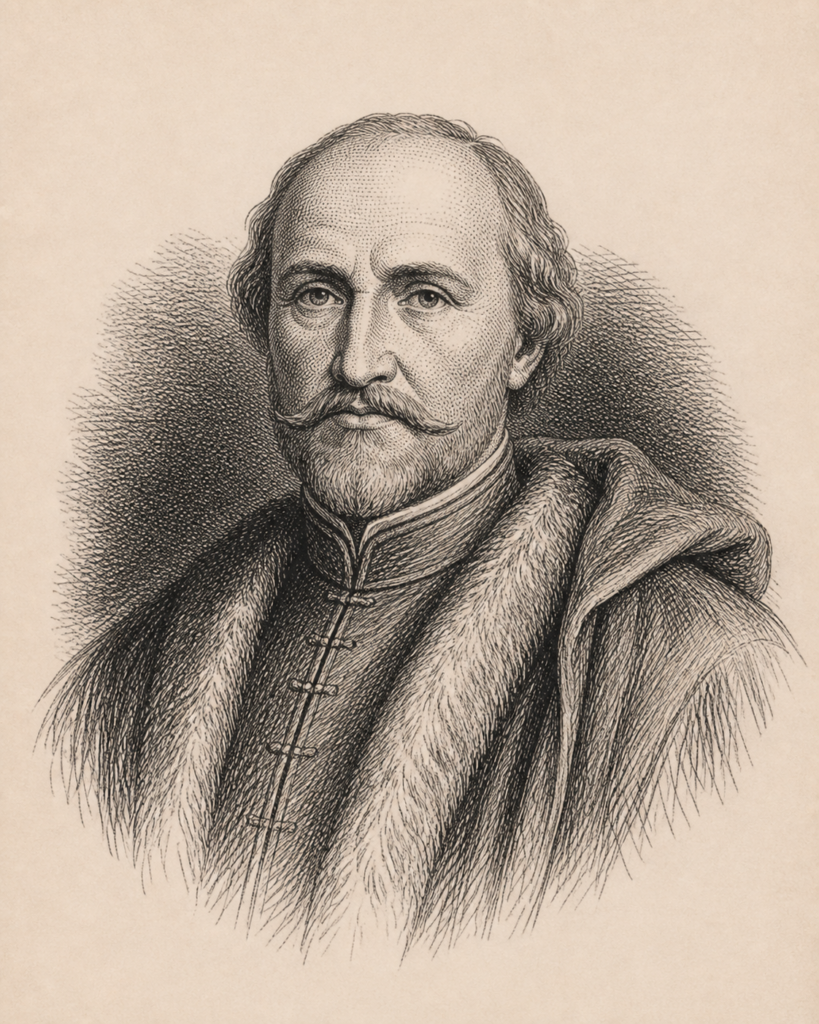
Holder 9 in the recorded post-Conquest succession
John Barton
Lord of Hasley
Purchased the manor for 800 marks and became an important patron of Thornton Church.
John Barton senior and junior acquired the Manor of Hasley for 800 marks in 1414. Barton commissioned significant work at the church.
John and his wife Isabella were buried beneath the north chancel arch. Disputes followed Isabella’s remarriage and death in 1457, and the estate was conveyed to Robert Ingleton in 1464.
- Purchased for 800 marks
- Church patron
- Buried at Thornton Church
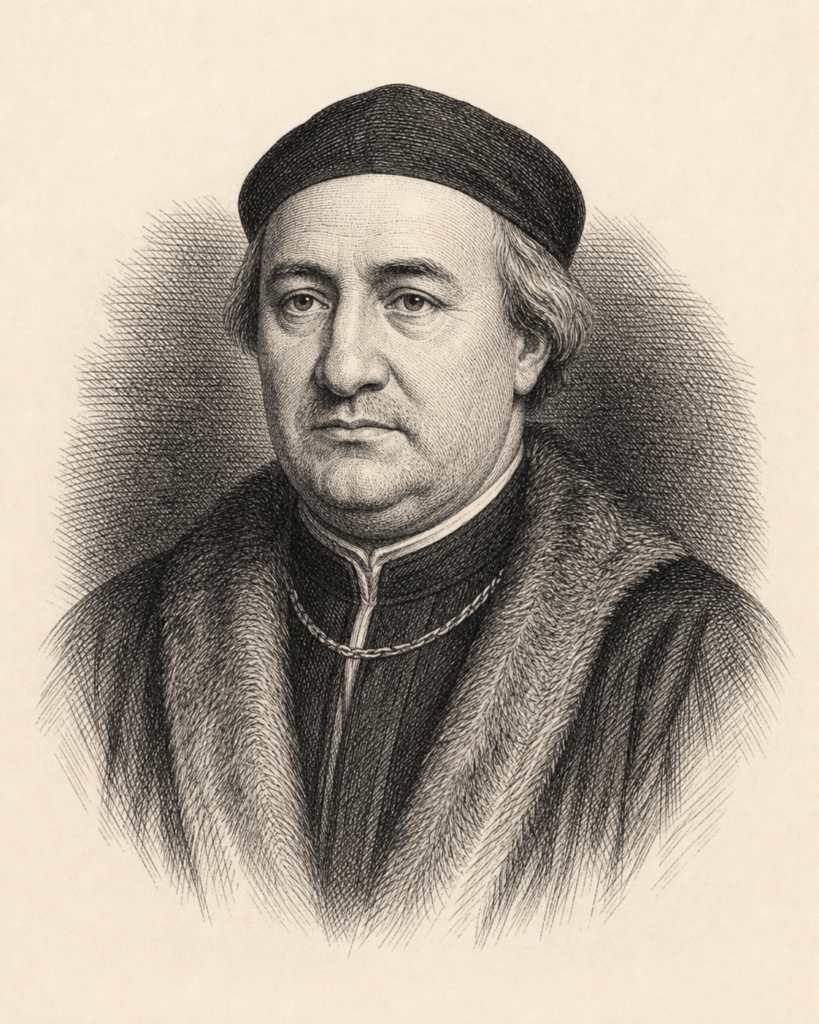
Holder 10 in the recorded post-Conquest succession
Robert Ingleton
Lord of Hasley
Chancellor of the Exchequer under Edward IV and the best-documented heraldic figure in the succession.
Robert Ingleton served as Chancellor of the Exchequer under Edward IV during the Wars of the Roses. His principal arms featured a chevron between three flaming tar barrels, with later quartered variants.
He married Margaret Dymock, Clemens Beaumont and Isabella Cantilupe, and the page records a large family from those unions. Robert died in 1472 and was buried with his family beneath an elaborate canopy in the chancel of St Michael’s.
- Chancellor of the Exchequer
- Service under Edward IV
- Buried in St Michael’s chancel
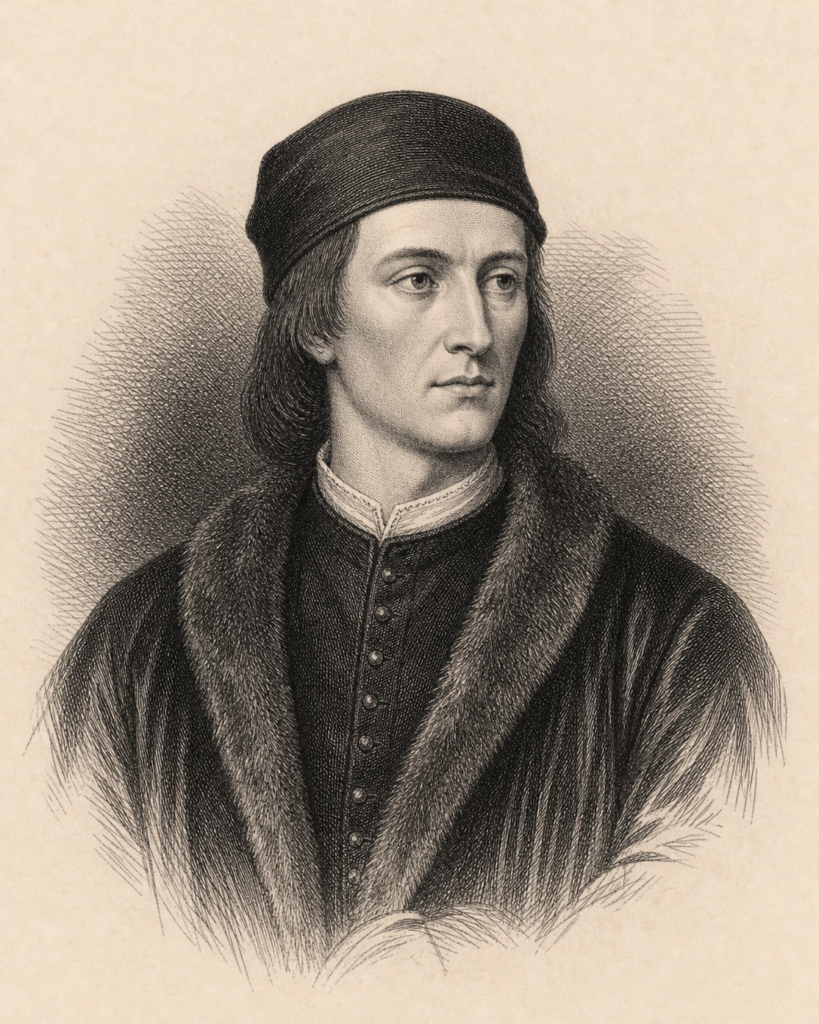
Holder 11 in the recorded post-Conquest succession
Robert Ingleton II
Lord of Hasley
Continued the Ingleton succession; the page connects his family to the surviving brass of Jane or Joan.
Robert Ingleton II continued the family’s lordship and is recorded as living until 1494. The page names a son Robert as heir and associates Anne Empson and a daughter Jane or Joan with this generation.
The source page also records Jane or Joan as born in 1502, which does not align with the stated 1494 death date. The plugin retains both statements as supplied rather than silently reconciling them.
- Ingleton succession
- Anne Empson connection
- Source chronology requires review
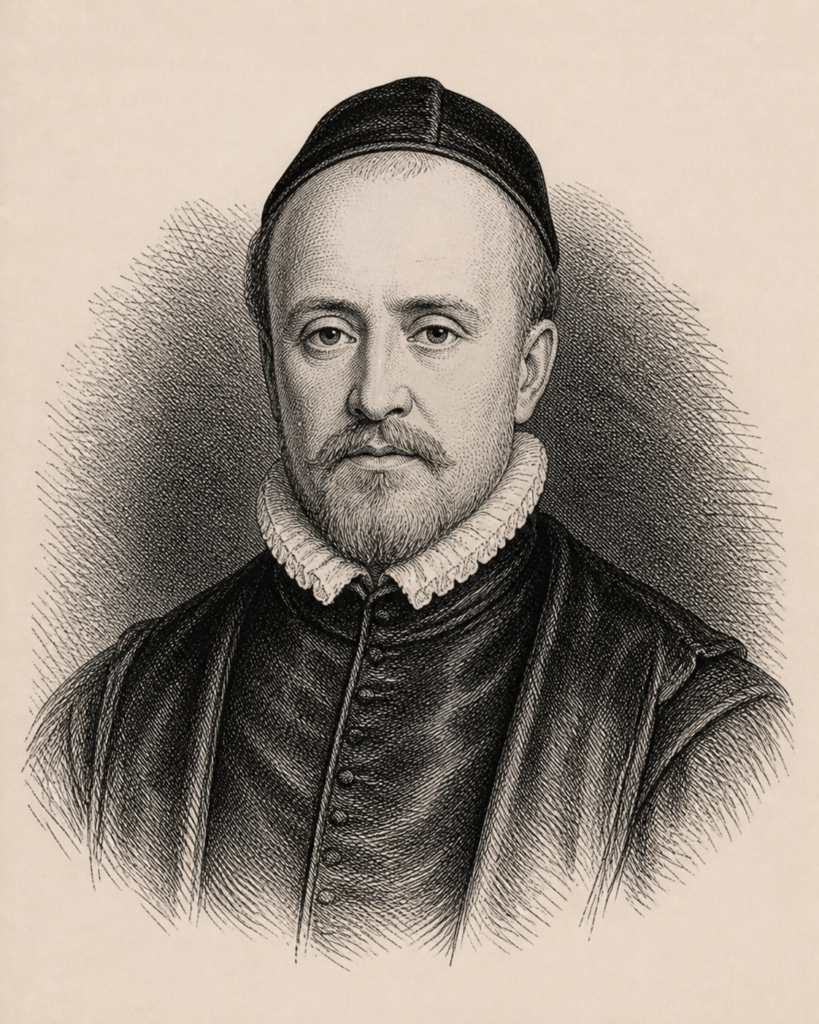
Holder 12 in the recorded post-Conquest succession
George Tyrrell
Lord of Hasley
Represents a Tyrrell tenure spanning religious reform, civil war, restoration and estate alteration.
George Tyrrell succeeded through Jane and married Helen or Eleanor, daughter of Sir Edward Montague. Their son Sir Edward Tyrrell was born in 1571. After Helen’s death in 1579, George married Margaret and had three sons and five daughters.
The page describes approximately 250 years of Tyrrell stewardship. It credits the family with alterations to the church and manor, support for the Church of England during the Reformation, Royalist allegiance during the Civil War and renewed prominence after the Restoration.
- Tyrrell dynasty
- Church and manor alterations
- Royalist and Anglican alignment
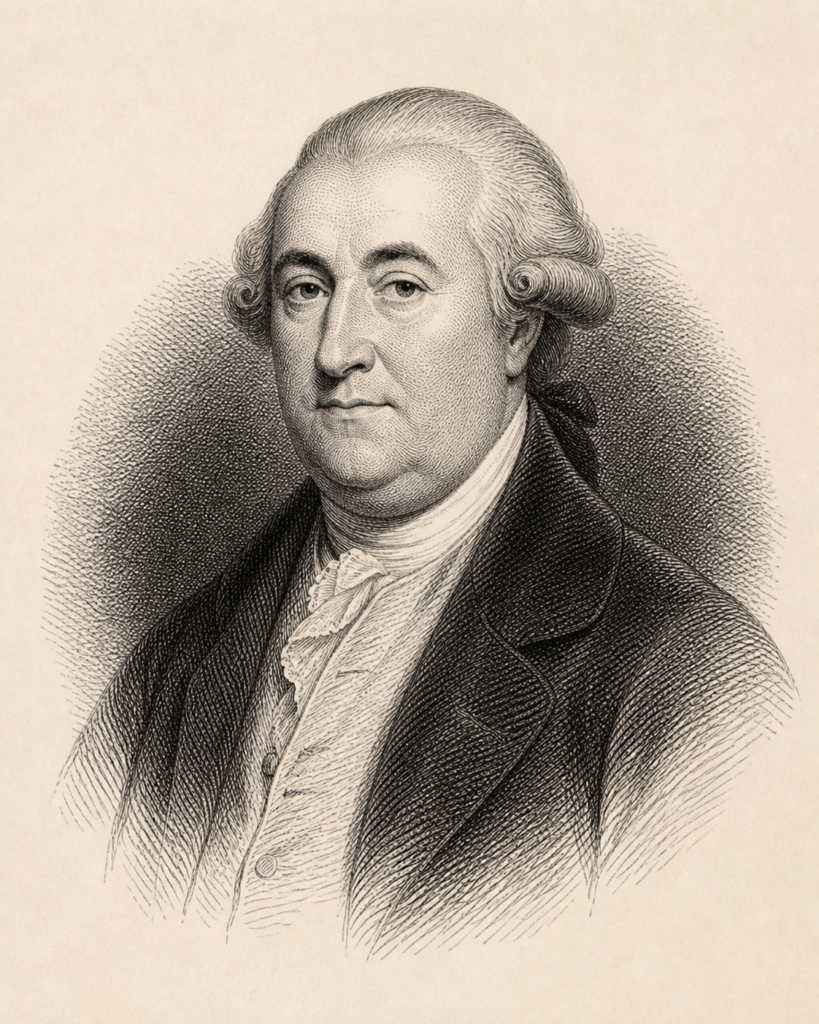
Holder 13 in the recorded post-Conquest succession
Thomas Sheppard
Lord of Hasley
Began the Sheppard tenure and linked Hasley to Elizabeth Cotton and their nine children.
Thomas Sheppard took possession of the lordship on 16 October 1775. He married Elizabeth Cotton, and the couple had nine children.
When Sir Thomas Cotton Sheppard died without a direct heir in 1848, the estate passed through his eldest sister Elizabeth Cotton Sheppard.
- Lord from 1775
- Marriage to Elizabeth Cotton
- Nine children
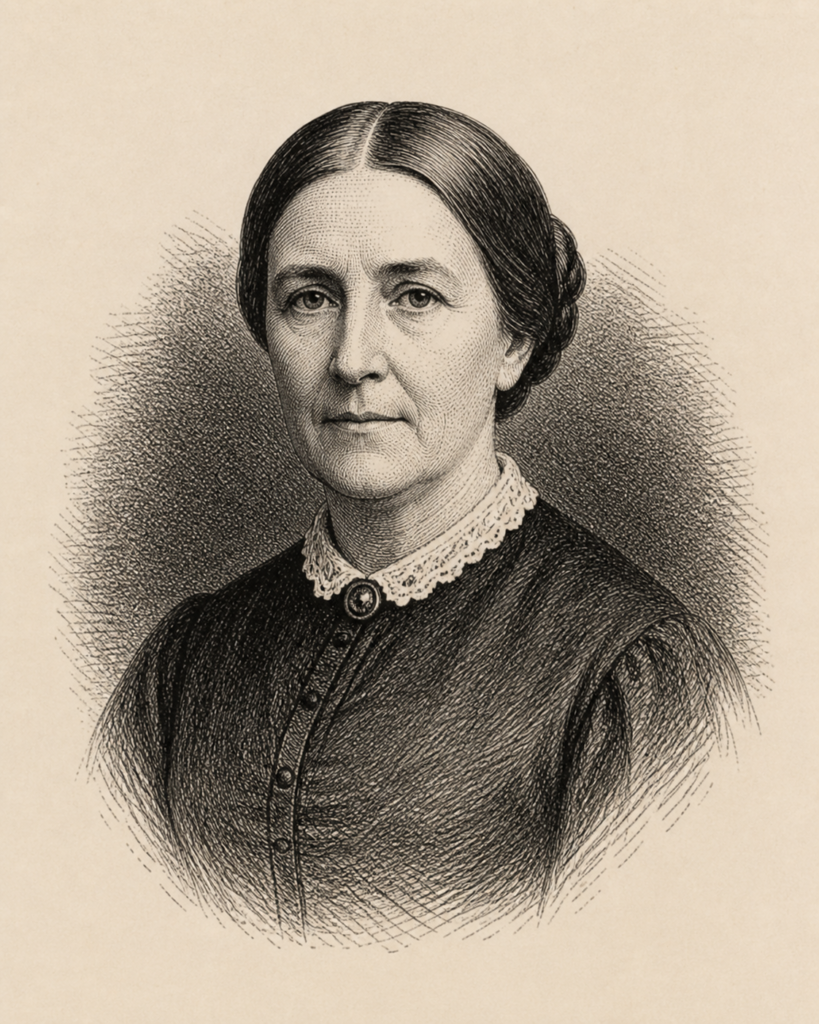
Holder 14 in the recorded post-Conquest succession
Elizabeth Hart
Lady of Hasley
Carried the Sheppard inheritance into the Hart and Cavendish families.
Elizabeth Hart married Thomas Hart and had a daughter, Elizabeth Maria Margaret Hart. Thomas Hart died in 1848, and Elizabeth died in 1854.
Their daughter Elizabeth Maria married the Hon. Richard Cavendish in 1841, establishing the next chapter in the estate’s succession.
- Lady of Hasley
- Hart inheritance
- Cavendish connection
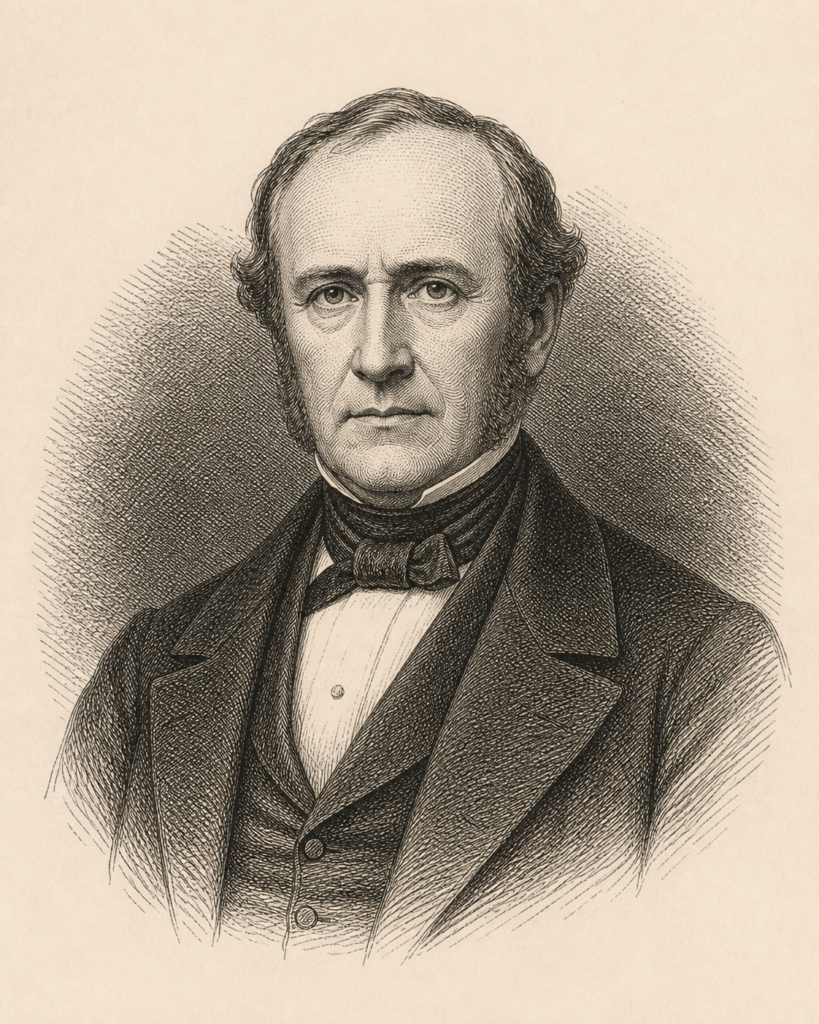
Holder 15 in the recorded post-Conquest succession
Richard Cavendish
Lord of Hasley
Oversaw the great mid-Victorian remodelling that gave the hall much of its later form.
Richard descended from the family of Lord Waterpark in County Waterford. He and Elizabeth Maria had three sons and six daughters; their eldest son William was born in 1843.
The Cavendishes remodelled Hasley Hall around 1850–56 and installed armorial glass tracing descent from the Ingletons through later families. During this period the township increasingly became known as Thornton. Lady Cavendish died in 1858 and Richard in 1876.
- Cavendish remodelling, 1850–56
- Armorial windows
- Thornton name adopted
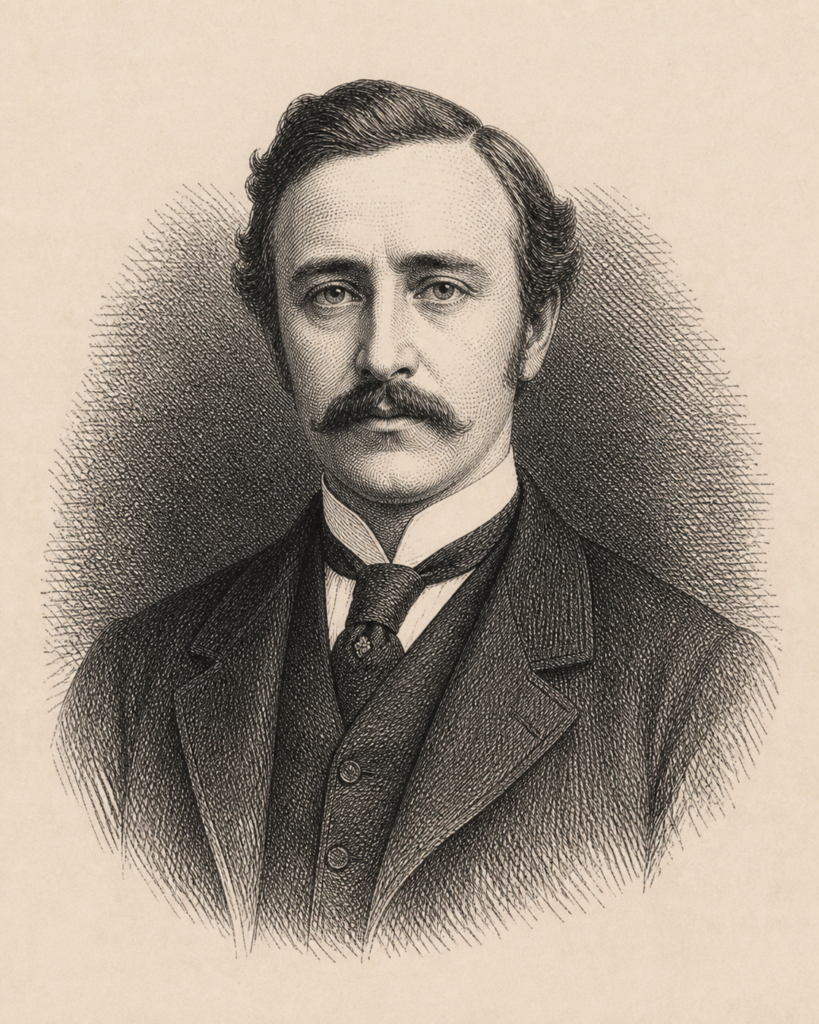
Holder 16 in the recorded post-Conquest succession
William Cavendish
Lord of Hasley
A brief and troubled tenure ending with his death in 1878.
William inherited Hasley Hall after Richard Cavendish and died in 1878 following inflammation of the lungs.
The page also records contemporary rumours of an attempted shooting and alcoholism. It identifies his grave as a simple white cross beneath a yew tree in the churchyard; these sensitive claims are retained as reported tradition, not presented as independently verified fact.
- Brief tenure
- Died in 1878
- Buried in the churchyard
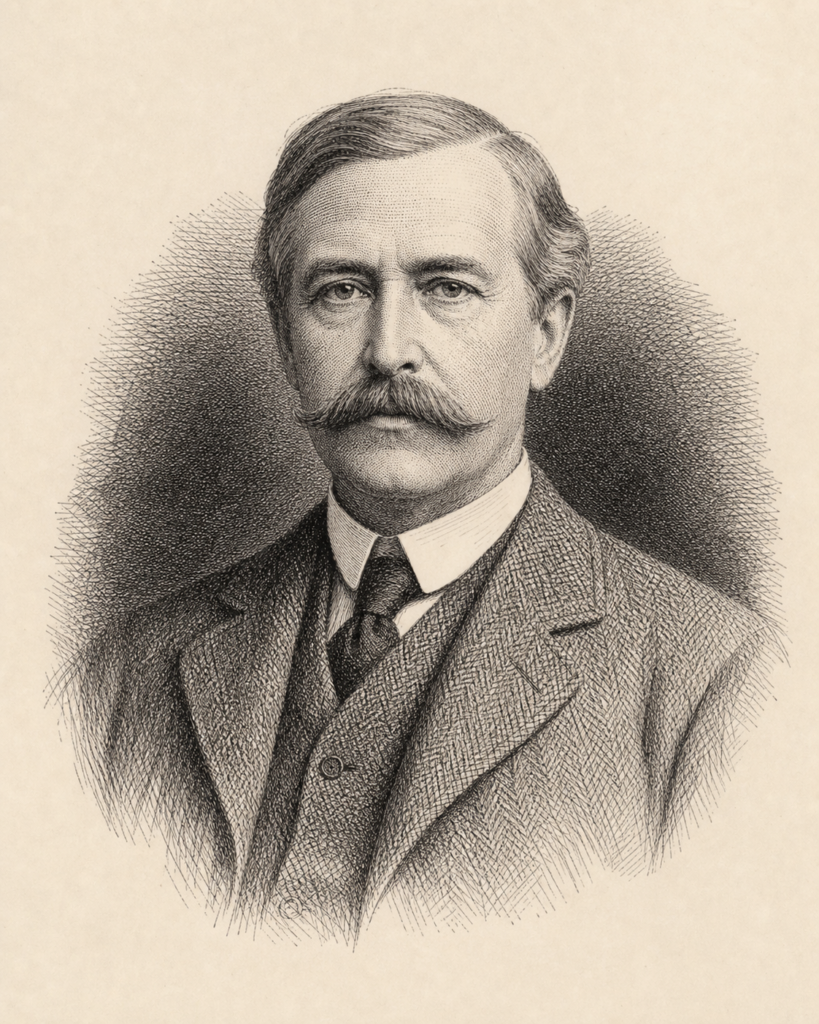
Holder 17 in the recorded post-Conquest succession
Henry Cavendish
Lord of Hasley
Travel, financial strain and bankruptcy culminated in the sale of the estate.
Henry became Lord of Hasley in 1878. The page connects his African expeditions with financial losses and eventual bankruptcy.
Hasley was offered for sale in 1904, and the estate passed from the family in 1905.
- African expeditions
- Bankruptcy
- Estate sold in 1905
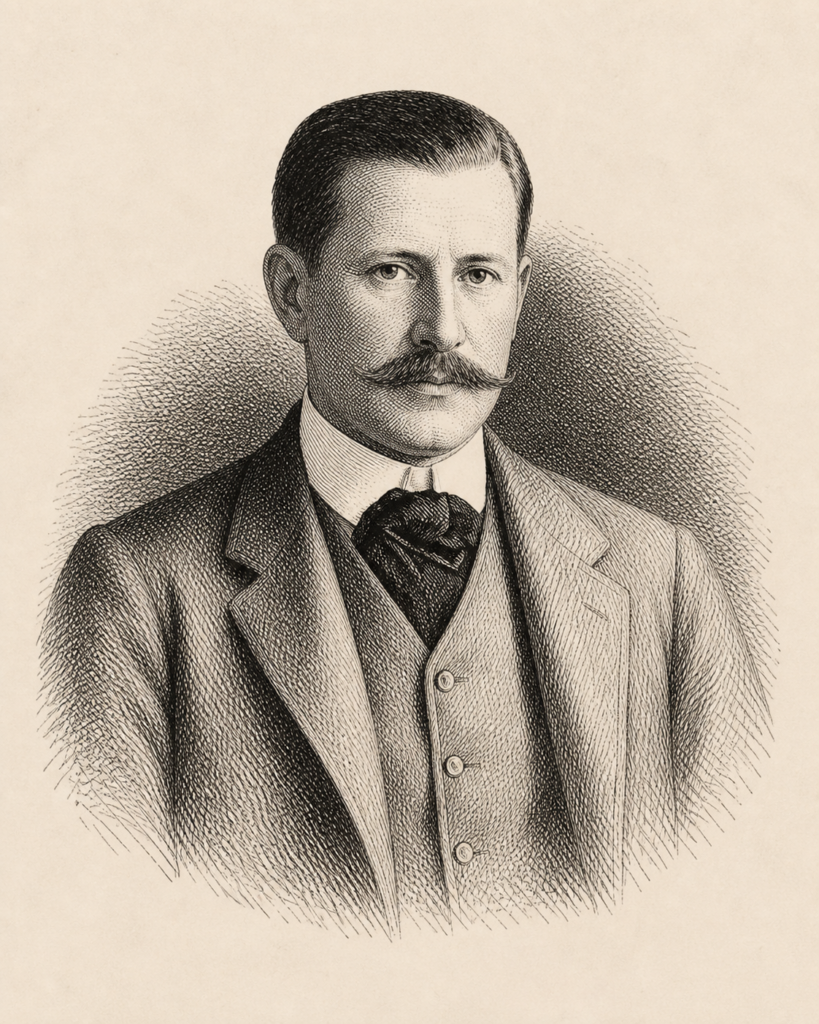
Holder 18 in the recorded post-Conquest succession
Col. Henry William Harris
Lord of Hasley
Brought Hasley into the twentieth century before the mansion passed to the Sisters of Jesus and Mary.
Colonel Henry William Harris, whose family wealth came from Harris bacon and sausage manufacturing, became Lord of Hasley in 1907.
He leased the mansion to the Order of the Sisters of Jesus and Mary. The Order acquired Thornton Hall permanently in 1957, while the title itself remained safeguarded in trust for a further 66 years.
- Lord from 1907
- Mansion leased to religious order
- Title held in trust
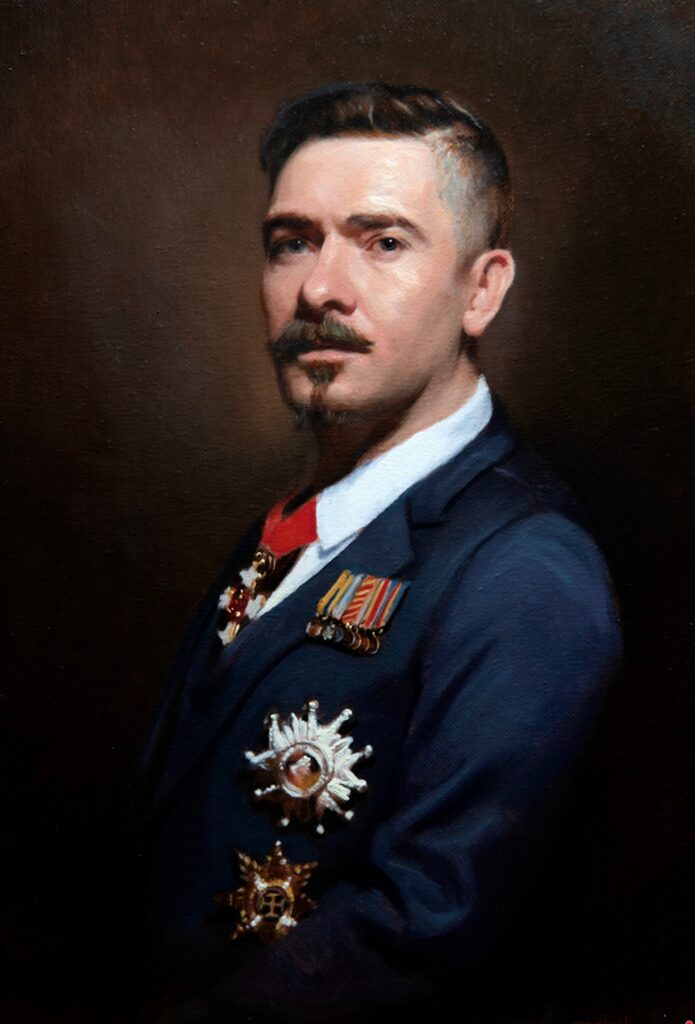
Holder 19 in the recorded post-Conquest succession
James Allister Odd
Lord of Hasley
Bequeathed in recognition of service, with the transfer completed in 2023.
The Lordship of Hasley was bequeathed to James Allister Odd in recognition of his honourable and distinguished services to the country and to the benefactor personally. The transfer was completed in 2023. He is married to Clarity Rose Odd and lives with their family in Oregon, United States.
James has made provision in his will for the Lordship to pass to his descendants or heirs, with the intention of preserving its continuity within the family in perpetuity.
The family arms are recorded as: Per fess embattled grady Gules and Argent; in chief, a sun in full glory Or charged with an eye; in base, a rose Gules, seeded and barbed proper. Mantled Gules, doubled Argent.
- Bequeathed in recognition of service
- Transfer completed in 2023
- Stewardship and continuity
Land, dignity and obligation
What the lordship represents
The source page describes Hasley as a historic tenure-based dignity, distinct from a peerage barony created by letters patent.
The dignity
The title or right of lordship held by deed or inheritance.
The manorial estate
The physical land and holdings historically attached to the title.
The seignory
The historic rights and obligations exercised within the estate’s boundaries.
Stewardship rather than peerage
A tenure-based dignity
The title is presented as rooted in the Anglo-Saxon and Norman structures of landholding. Medieval lords administered demesne lands, presided over manorial courts and carried obligations of local governance under the Crown.
Unlike later peerage titles, a barony by tenure was attached to land and service. In its modern historical presentation, the lordship is treated as a symbol of custodianship, research and continuity rather than political privilege.
Reading the medieval record
Domesday and manorial terms
A concise guide to the language used to describe Hasley’s land, administration and legal status.
01Domesday Book
The great survey of England ordered by William I and compiled in 1086 to record landholding, productive resources, population and value for royal administration and taxation.
02Hide
A unit used for tax assessment, theoretically 120 acres but highly variable. By custom it represented the land an eight-ox plough might cultivate in a year.
03Hundred
An Anglo-Saxon subdivision of a shire, normally possessing a monthly court for civil and criminal matters. It did not consistently equal one hundred hides.
04Barony by tenure
A dignity attached to the holding of land and obligations of service, distinct from later peerage baronies created by letters patent.
05Incorporeal hereditament
An inheritable right regarded in law as property even though it is not itself a physical object.
The Domesday survey was ordered by William I and completed with extraordinary speed. Its assessment of holders, resources and value makes it the central documentary threshold for Hasley’s post-Conquest history.
On this page
Lordship of Hasley
The historical feudal lords of Hasley
Nestled in the Buckinghamshire countryside, the Lordship of Hasley represents one of England’s enduring manorial titles, rooted in the early structure of feudal society. The title “Lord of the Manor” originated in the Anglo-Saxon and Norman periods, when landholders governed estates directly under the Crown’s authority. These lords held both administrative and judicial responsibilities, managing demesne lands and presiding over manorial courts that shaped local governance. Today, this title is often associated with the historical figure Lord Hasley, whose legacy continues to influence the region.
The Lordship of Hasley is regarded as a historic feudal barony—a tenure-based dignity established long before the formal peerage system emerged. Such baronies, often called baronies by tenure, were hereditary offices attached to land ownership rather than grants of nobility through letters patent. They conferred duties of stewardship and service rather than political privilege, distinguishing them from peerage baronies created by the Crown in later centuries.
The significance of the Lord Hasley title is reflected in the heritage and traditions of Thornton Parish, drawing visitors who wish to explore the rich history surrounding this historic title.
In legal terms, a manor encompassed three inseparable components:
- The dignity – the title or right of lordship held by deed or inheritance;
- The manorial estate – the physical land and holdings attached to the title;
- The seignory – the historic rights and obligations exercised within the estate’s boundaries.
Today, Hasley remains recorded as a feudal/manorial lordship (incorporeal hereditament) under NFRA H1223210-21, with a notice concerning the 2023 transfer published in The London Gazette (Notice 4290557, 23 February 2023). The hereditary distinctions of the House are also documented in the British and European Nobility Register (BENR #720713).
Historical evidence connects Hasley’s origins to pre-Domesday holdings under King Edward, later incorporated into the Domesday Book of 1086. Although early surveys occasionally contained inconsistencies, subsequent records and clarifications have affirmed Hasley’s continuous status as a manorial estate of note.
Bequeathed in recognition of service. The Lordship of Hasley was bequeathed to James Allister Odd in recognition of his honourable and distinguished services to the country and to the benefactor personally. The transfer was completed in 2023. James has made provision in his will for the Lordship to pass to his descendants or heirs, with the intention of preserving its continuity within the family in perpetuity. In the present day, the title stands as a symbol of custodianship and continuity, representing centuries of local administration, scholarship, and service within Buckinghamshire’s historical landscape.
The Historical Lords of Hasley
The Doomsday BookThe Doomsday Book is a survey of England in A.D. 1086. A census of the productive resources and population of the country, also their value, who held what manors or lands. It was carried out on the orders of King William I in Winchester in 1086. The survey was undertaken in less than 12 months. Two teams of people were sent out – one team to check the work of the other to make sure there were no errors or back-handers, as this information was used to undertake the tax requirements of the King. Hide: A unit of measurement for assessment of tax, theoretically 120 acres, although it could vary between 60 and 240 acres. By custom it was the land that could be cultivated by one eight-ox plough in one year. In the Devonshire Domesday Book, it seemed to average about 64 acres. Hundred: Anglo Saxon institution. Subdivision of a Shire. Theoretically, but hardly ever, equalled one hundred hides. Generally had its own court which met monthly to handle civil and criminal law. 1 hectare is approximately 2.5 acres, or 1 acre is 0.4 of a hectare. 1 hide = 48 hectares therefore 100 hides = 4800 hectares.